

Microplastics in acrylic spray paint - Researching the environmental effects of the smallest particles found in spray paint
"The invisible threat beneath our feet: how spray paint is changing our soil."
When we think of plastic pollution, we often picture discarded water bottles on a beach or sea turtles tangled in nets. But a new scientific study has highlighted a much more subtle, yet potentially more dangerous, source of pollution that is literally raining down on our soil: spray paint.
At Aerosol Alliance, our goal is to raise awareness about the environmental impact of spray paints among graffiti artists, street art curators, and paint manufacturers. We are striving for a more sustainable future for our scene, and therefore, we bring the latest scientific findings to the attention of our allies. We hope that making knowledge accessible will contribute to more collaboration and conscious, informed decisions when creating art.
Hereby, we came across the work of a team of researchers from Freie Universität Berlin, who recently published a study in the Journal of Hazardous Materials (2025) exploring how paint-derived microplastics are quietly altering the health of our land. Their findings suggest that the paint we use for street art, home DIY projects, or industrial maintenance may be doing much more than just adding color - it’s changing the very chemistry and biology of the ground beneath us.
The overlooked pollutant
Microplastics are generally defined as plastic particles smaller than five millimeters. While we know a lot about how standard plastics (like polyethylene from supermarket bags) affect the environment, paint-derived microplastics are quite different.
Paint isn't just one material. It is a complex composite cocktail of polymer resins (the film-former), solvents (the liquid), pigments (the color), and various additives like UV stabilizers and biocides designed to make it last on the applied surface. When you spray paint, tiny droplets drift away, harden, and eventually settle into the soil. In fact, previous research found up to 29 million of these tiny paint particles in just one kilogram of urban soil.
The Experiment: soil under the microscope
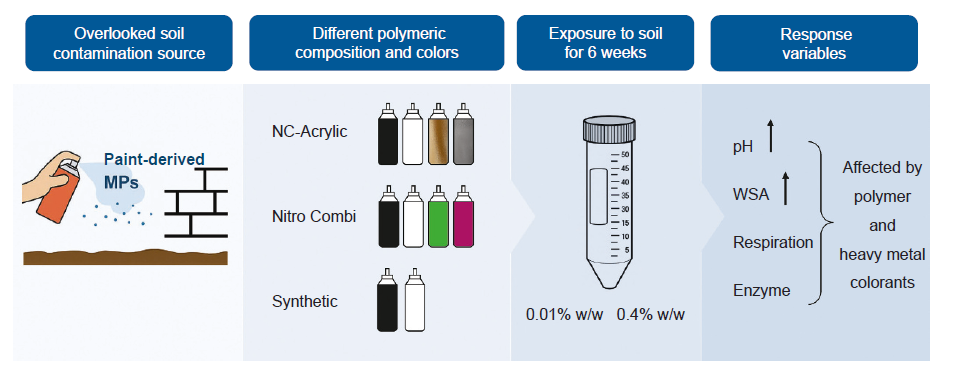
To understand the impact, the researchers took 10 different types of commercially available spray paints - ranging from nitro-acrylic to synthetic - and applied them to soil at two different concentrations: a relatively low environmentally realistic amount (0.01%) and a high amount (0.4%). They then let the soil incubate for six weeks to see how its health changed.
The scientists looked at four key indicators of soil health:
- Soil pH: How acidic or alkaline the soil is.
- Water-Stable Aggregates (WSA): Essentially, how well the soil holds together in crumbs, which is vital for preventing erosion and letting air/water flow.
- Soil Respiration: A measure of how active the soil microbes are (how much CO2 they breathe out).
- Enzyme Activity: The biological tools that soil uses to break down nutrients like carbon, nitrogen, and phosphorus.
Key Discovery 1: Spray paints change the soil's chemistry
The first big takeaway was that spray paint makes soil more alkaline. At high concentrations, almost all the tested paints significantly increased the soil pH. This likely happens because paints contain alkaline fillers like calcium carbonate or zinc oxide.
While a slight change in pH might not sound like much, soil pH is the crucial variable determining which plants can grow and how nutrients move. If the paint overrides the soil's natural ability to regulate its own acidity, it could disrupt local ecosystems over time.
Key Discovery 2: Soil gets more sticky, but not in a good way
Interestingly, the study found that paint microplastics actually made soil crumbs more stable. You might think stable soil is good, but the reason it's stable is problematic. Unlike hard plastic beads, paint is designed to be adhesive.
The researchers found a strong negative correlation between particle size and soil stability: the smaller the paint particles, the more they glued the soil together. This physical adhesion can trap microbes and potentially interfere with how water and air move through the ground.
Key Discovery 3: The copper problem
Perhaps the most alarming finding was related to the color of the soil. Not all paints were equally toxic, but the paints containing copper (often used in metallic or specific color pigments) were the most damaging.
Copper-containing microplastics consistently had significant negative effects on every single health parameter measured. Copper is known to be toxic to the fungi and bacteria that keep soil alive. In these samples, microbial activity plummeted, and the soil's ability to cycle nutrients was severely impaired.
Why this matters to you, and to all of us
This research isn't just for scientists; it has real-world implications for how we live and build:
- Biodegradability matters: Not all polymers are the same. "Nitro Combi" paints, which contain more biodegradable components like nitrocellulose, caused a quick spike in microbial activity, suggesting the soil was trying to "eat" the paint. "Synthetic" paints, however, were like armor. They are highly resistant to breaking down and lingering much longer.
What does it mean in practice? In areas where synthetic paints linger, they can create a physical barrier in the soil that prevents roots from absorbing water effectively, potentially stunting plant growth. Furthermore, because these plastics don’t break down, they can accumulate in the digestive tracts of soil-dwelling organisms like earthworms, disrupting the local food web.
- The concentration curve: The higher the concentration of paint, the more toxic the effect. This is particularly concerning for industrial areas, roadsides (where road markings wear down), or popular street art spots.
High concentrations of these microplastics can lead to biodiversity deserts in urban hotspots where only the hardiest, most invasive plant species can survive the altered soil chemistry. This loss of plant variety reduces the available habitat and food sources for local pollinators (yes, the bees!) and urban wildlife.
- A call for transparency: The scientists pointed out a major hurdle: we often don't know exactly what is in the paint we buy. Many of the toxic effects observed likely came from hidden additives like plasticizers or biocides that aren't clearly labeled on the can. That is why The Aerosol Alliance advocates for more data transparency and is pushing for measuring the environmental footprint of the spray paint products.
Conclusion: time to change the formulation?
The study concludes with a clear message: while spray paint makes our world more colorful, its chemical composition makes it a uniquely hazardous material for our terrestrial environment.
The researchers are calling for stricter regulations on paint production, specifically urging manufacturers to minimize heavy metal pigments (like copper) and provide much more transparency about the chemicals they use.
Next time you pick up a spray can, remember that the "overspray" doesn't just disappear. It becomes a permanent, chemical resident of the earth beneath your feet.
Get in touch
Are you a graffiti- or street art brand or spray paint manufacturer? Get in touch with us, The Aerosol Alliance! We can assist you with the Life Cycle Assessment of your products and help you improve the footprint of our beloved spray paints.
And as a graffiti artist, be aware that every piece you create leaves behind a bit more than only the colorful decoration on the wall.
References
Xu, Y., et al. (2025). Spray paint-derived microplastics influence soil properties and microbial activity through their composite composition. Journal of Hazardous Materials.