
Artists: want to paint greener? Start here with a few simple tips.
As artists and creatives, we need to come together as a community and drive positive change together. There is a lot that you can do – no matter who you are or where you are. Interested in green graffiti? Spray painting with less impact? This page will guide you on how to paint greener.
1. Try out water-based paint
You might know this already but similar to latex paint there are also water-based spray paints available. In general, they are more expensive compared to regular spray paint and not all spray paint manufacturers have them in their product portfolio. However, they are significantly better for the environment.
This has two main reasons:
- They create zero to none VOC emissions during the use phase.
- Water-based paint do not use chemical solvents (which are mostly fossil-based), because the solvent in water-based paint is? Yes, exactly simply water.
Our advice: the newer types of spray paints which are water-based, release limited or zero harmful VOC emissions compared to acrylic or oil based spray paint. Try out water-based paint if you can.
2. Use wall paint
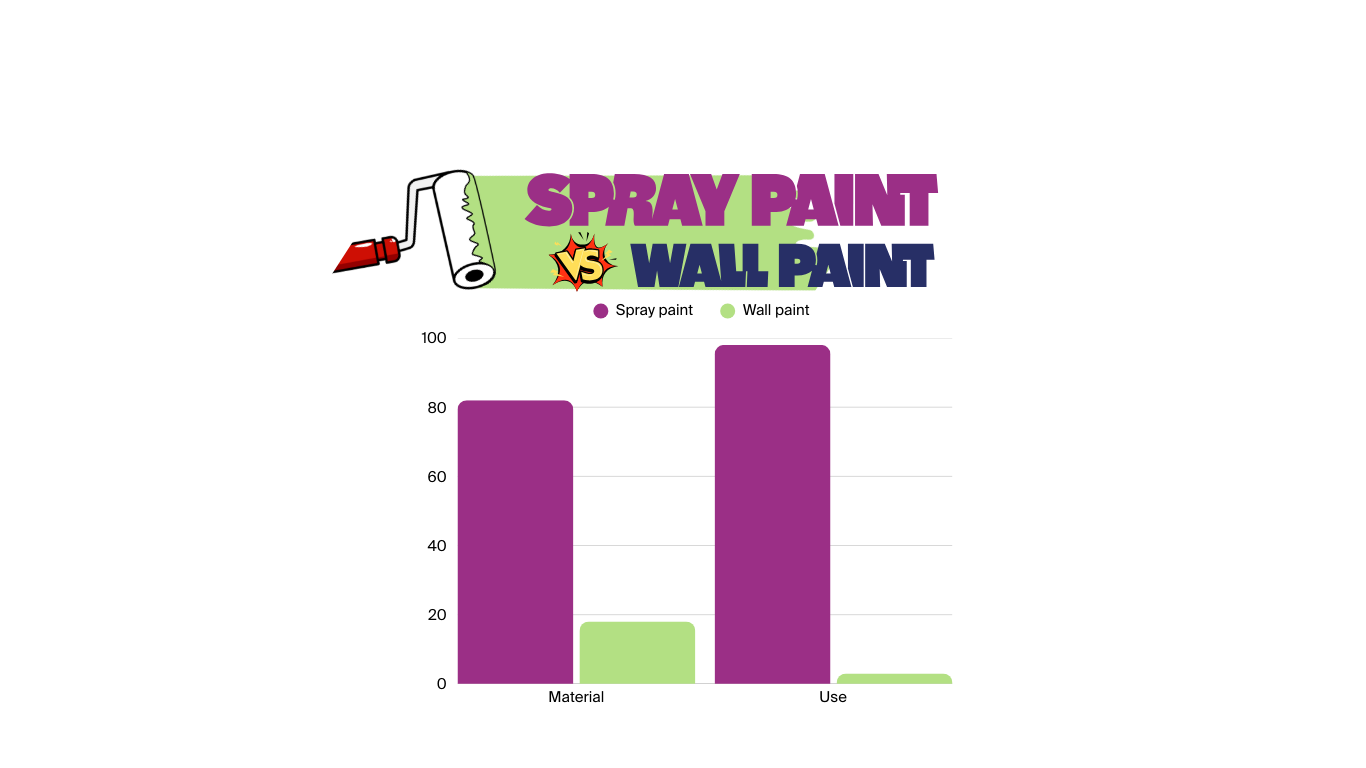
The environmental impact of ‘regular’ latex wall paint (often referred to as bucket paint) is significantly lower compared to spray paint.
It has been mentioned often as the key difference between oil-based and acrylic or solvent-based paints. The amount of VOCs that are released by latex wall paint during drying and application is considerably smaller compared to acrylic spray paint. So the next time you are doing a full-color burner. Why not try and make a multi-color latex filling instead of using only spray paint? [4,5]
For larger murals using latex also helps to cover more area of the wall, while using less paint. All in all saving a lot of material usage. Not only are you doing less harm to the environment... It is good for your wallet too!
We hope that all paint brands and manufacturers will be able to provide more accurate data in the future. However, we don’t need the exact numbers to know that there’s a big difference between the environmental impact of (acrylic) spray paint and latex. And wall paint always wins.
3. Use second hand paint
Another cheap and environmentally friendly way of painting is to buy paint second hand. A lot of local paint and hardware stores give discounts on paints that were mixed up wrong. The customer might find the color off, however the store can't sell the mixed paint anymore, discounts of 50 to 80% are common. Old stocks at the hardware store are sometimes also discounted heavily. In addition, thrift shops might also have a designated section for second hand paint.
The most affordable option is free! Free paint sound like a dream, right? Well in some countries (e.g. in The Netherlands) people ditch their used paint on the streets when bulky waste is about to be picked up by the municipality. Highest chances on finding a nice bucket on the curb is during holidays and season changes. When people are more keen to redecorate their house.
In multiple countries, states and municipalities the recycling facilities are also enabling leftover paint to be picked up at their facility. Some examples are: PaintShare in Canada or Community Repaint in the UK.
4. Dispose of your spray cans properly
We all know how hard and invonvenient recycling can be. But it is one of the most crucial steps you can take as an artist. Fulfilling the duty of disposing your waste at the right place makes you a true ally of The Aerosol Alliance.
Bringing your empty cans to the recycling facility is the best waste treatment option. “Empty aerosol spray cans from paint, hair spray, shaving cream and cooking spray can be recycled in most local recycling programs. Aerosol spray cans that are full or partly full must be dropped off at a hazardous waste location.” [1]
Your local recycler will either send the spray to ‘chemical waste’ or ‘recycle the cans directly’ or ‘incinerate’ them. This is dependent on the situation and mainly how the local waste treatment program handles spray paint on a municipal level. More technologically advanced countries will have the capacity and technology to recycle cans properly. We encourage you to research how this is done in your region and find the most reliable facility to dispose aerosol paint cans.
Tips for recycling
- Taking your cans home and bringing them to the waste treatment facility is the best option.
- If there is no other alternative, make sure to dispose of your empty spray cans and caps in a trash bin. This is the second-best option.
- Always put your dirty caps in the regular trash bin or when available a seperate plastic bin.
We have found some great additional tips via Recycle Coach. Please read their “5 Tips on how to recycle aerosol cans.”
Avoid dumping your cans!
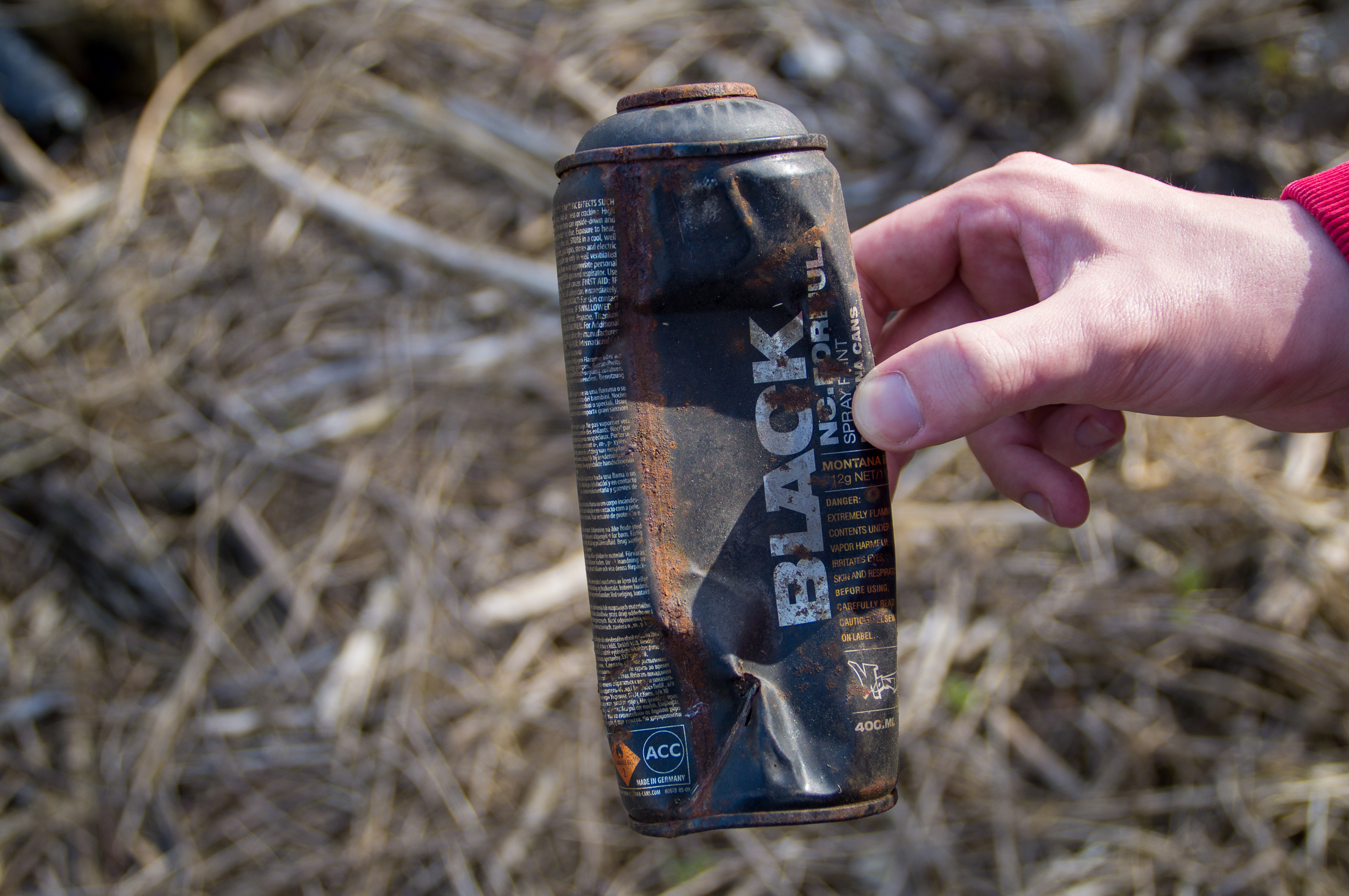
By all means, avoid disposing your spray cans on the streets or dumping them in nature. Leaving them on the spot is obviously not smart. But also polluting! It would leave the metal cans to rust and over time they could start leaking andemitting remaining fumes and other chemicals during the process. Paint remains leaking into nature will have a toxic effect on the environment [2,3].
Conclusion
So, the next time you go out and paint. Consider these four options:
- Try out water based paint;
- Use wall paint (latex);
- Using second hand paint;
- Dispose of your cans properly.
We don’t promote any products or brands. We want to provide you with tips to paint more environmentally conscious and safely.
References
We are always curious to learn more and in need of better references, preferably scientific papers that support the arguments we pose. Have you read a cool and useful article? Share it with us :)
contribute